
Interviewing Amira Jazeera, the Palestinian Pop Princess
- Arianna B. Bartolozzi

- Oct 15
- 5 min read
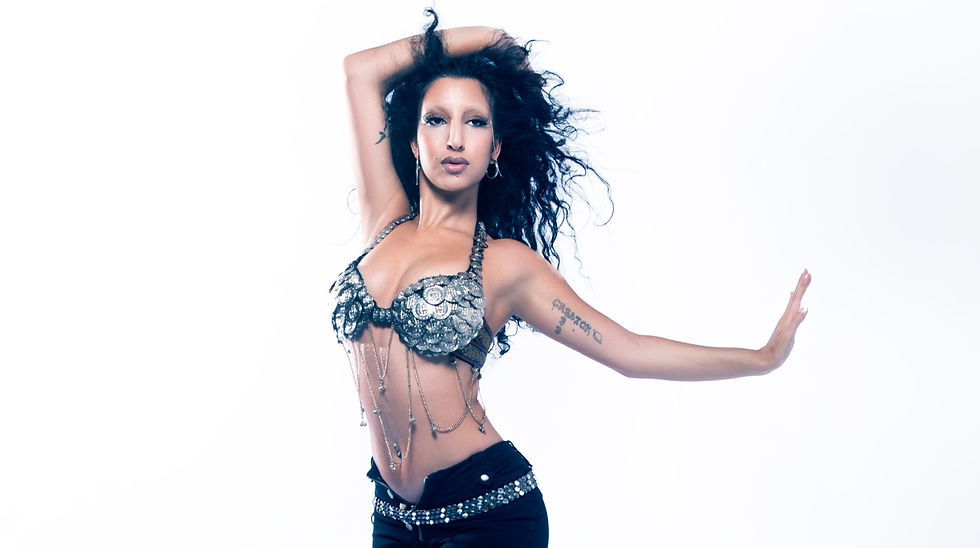
Meet Amira Jazeera, the Palestinian-American singer and producer who is turning her life into pop anthems you can’t forget! In this interview, she opens up about her journey, her music and her roots. From her bedroom in Chicago, she fuses glossy ’80s and 2000s vibes, contemporary R&B and the rich sounds of her Palestinian heritage. Her latest album, The Amira Diaries, is a diary of survival, self-love, grief and resilience wrapped in glam, baroque-inspired elegance and sultry Arabic influences.
Palestine is a country in the Mediterranean region that is facing hardship and continues to fight for its freedom. It also lives on thanks to artists like Amira, who transform their present, their past, their emotions, and their roots into music that is personal, bold, and unforgettable. If this cause is close to your heart but you can’t contribute directly, supporting artists like her is a tangible way to make a difference, women who, through their music and their voices, proudly carry their origins forward and keep their culture alive. In her music, Amira carries forward the spirit of Palestine, and we join in hoping to see it free.
Enjoy the interview!
Your first album “The Amira Diaries” came out in April. How was the creative process behind it like? What impressions or emotions stayed with you while making it?
I've always wanted to make an album. I think that over time I was writing songs based on my experiences, and it all just kind of made sense at the time to make an album. I named it The Amira Diaries because it's very personal and a lot of the songs were a way for me to cope with things like heartbreak, trauma, grieving and all of these things. That's what inspired the album and the process. Honestly, a lot of it was made in my home studio by myself. I was in a place where I had lost everything and had to just start over. I taught myself to really produce, which helped me learn who I am, what my sound is and what I like!
If you had to suggest a place or a situation where you think it's better to listen to the album, which one would that be?
Location-wise, I think that you can listen to it honestly anywhere. I hear it being played at a café, a store, in your bedroom, or by the fireplace. Wherever makes you happy. I would say the people who should listen to it are definitely those who have gone through a breakup. Listen to it for sure. Or if you're going through a toxic relationship, listen to it.
Which of your songs would you recommend to someone who has never listened to your music before?
I would say Still Thinking About Me, Solitude and Hypnotizing! Those are my top three.
We saw that you had your own headline show last week. How did it go and how did you feel to perform? We also noticed you were joined by other Mediterranean artists (Greece and Lebanon), which is so amazing! How does it feel to represent our beloved Mediterranean region so far from home?
Honestly, my younger self would not believe that that was possible! I have always wanted to see us in these spaces, and it was a beautiful night. Everyone that came was very nice. The audience was so warm and welcoming, and it just felt like such a safe space, and anyone who came there could be themselves and feel accepted. So it was great. I loved it so much. It was queer, it was Arab, it was Greek. It was amazing. It was a good time.
That's so cool. And talking about this, You’re also the Palestinian Pop Princess. How do your Palestinian and Mediterranean roots influence your music?
I would say I grew up listening to a lot of different types of music. My dad would listen to a lot of Arabic music. My mom would listen to a lot of 80s and 90s music, like Mariah Carey, Janet Jackson, stuff like that. And I think my music is like a blend of those worlds. I like to incorporate a little bit of influence, like Palestinian influence, percussion-wise. I really love Middle Eastern drums and adding that to my music. It's so cool.
Do you feel a kind of responsibility as an artist with Palestinian roots to talk about the current situation and to highlight your heritage and the struggles of Palestine through your work?
Yes. As a Palestinian, and I think a lot of Palestinians will say this, we're always loud and proud about being Palestinian. Like, we will shout it from the rooftops! So I will always claim that and be proud of who I am and my roots. And I think, yeah, it is a responsibility, but it's also a responsibility to use your platform if you have it and to use your voice. It would be really silly if I claimed to be Palestinian and did not talk about it. This is also something that is affecting a lot of my peers, my own family and something that is very important to me to talk about. So, yeah, I think it's very important to be a Palestinian girl in pop, breaking barriers and stuff. It's something I've always dreamed of doing, and I'm always going to claim who I am.
Since you are also a producer, have you noticed any differences in your experience as a woman in this field?
Yeah, being a woman in this industry, there's always going to be a man mansplaining you, talking to you like you don't know what you're talking about, but you probably know more than him. I think I became a producer out of necessity because, at the beginning of my career, I did work with a lot of men, and some of those men were taking advantage of me, and I did not know that until later. But yeah, it is a difficult role to be in, but it's important that we stick together and support each other, too. Another thing is, whatever knowledge I have, I try to pass it on to my peers, like my producer friends or other pop girls around me. I'll give little Ableton lessons to my friends who need help. It's important that we help each other out because it's not always safe, and that's just the unfortunate truth.
Is there any suggestion you’d like to give to other independent girlies who make music just like you?
My suggestion is definitely: you’ve got to start somewhere. A lot of the time, it can be discouraging to think, "Oh, I don’t have studio equipment. I don’t have this. I don’t have the money to go to a studio." But I started off like that. If you have a phone, you can do so much. You can record on GarageBand, there’s BandLab, SoundLab, there are all these apps nowadays you can start with. Also, shoot your shot. It does not hurt to reach out to someone you want to work with. What are they going to say? No? If they say no, that’s fine, move on. But you could possibly collaborate with someone. And yeah, just keep going. Push your ideas out. Don’t wait. Just do it, because time is just going to pass you by if you don’t.
You can follow Amira Jazeera here and listen ot her music here:


